
All Mobile phone users in Laos need to be registered
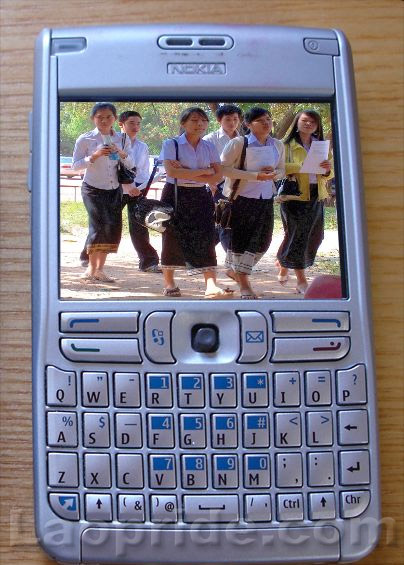
Mobile phone users in Laos will soon be registered in a bid to assess the exact number of users and determine the real growth of the telecoms sector, a senior official said on Friday.
The government has approved a proposal to register mobile phone users based on a request from the Ministry of Posts and Telecommunications earlier this month.
The ministry's Deputy Minister Padapphet Sayakhot told Vientiane Times on Friday that registration will start next month. Those who fail to register will have their mobile invalidated.
“Telecom operators tell us th at about 10 million people are using mobile phones. But what we find is that some people buy a sim card and use it f or only one or two weeks and then throw it away, while the operator continues to register the card user,” he said. Mr Padapphet said registration will avoid wasteful investment in the sector because operators can cancel any number that is no longer in use.
“Now users often complain when we invalidate their number, so we want to set a rule to regulate phone usage and improve management.”
Some people have two or three sim cards to make sure they can always contact their friends and business associates if they cannot get a signal from one service provider.
Laos has a population of 6 million people, with more and more using mobile phones, including in rural areas.
There are four main service providers - Lao Telecommunications Company, Enterprise of Telecommunications Lao, Star Telecom Co Ltd, and Vi mpelcom Lao Co Ltd.
The Ministry of Posts and Telecommunications is one of four new ministries approved during the first session of the National Assembly in June. The ministry is working to improve its structure and allocating officials to supervise various departments.
Mr Padapphet said the ministry aims to expand the use of the Lao language option on mobile phones and incorporate mobiles in areas such as e-mobile and mobile banking.
One of the most important issues is to make sure that more people in rural areas can access the Internet and obtain information they can use to improve their livelihoods, he said.
By Somsack Pongkhao
 Posted by samakomlao
on 4:25 PM. Filed under
 :))
 ;))
 ;;)
 :D
 ;)
 :p
 :((
 :)
 :(
 :X
 =((
 :-o
 :-/
 :-*
 :|
 8-}
 :)]
 ~x(
 :-t
 b-(
 :-L
 x(
 =))
