During the end of each year, many companies in Laos produce their own calendar and distribute to their customers. One of the highlight of calendar this year would be impossible, if not mention the calendar from Lao Telecom, where many beautiful and lovely Lao girls in Lao traditional styles are on the cover of each month. Find out more of these calendar, click :.
In less than 2 years from now, Vientiane’s Talat Sao (or Morning Market), Laos, will be drastically different from what it is today. Talat Sao is now redeveloped into a modern shopping centre, housing more than 1,600 shops selling all kinds of merchandise. There will also be a 400-lot carpark in the shopping centre... more info and photos:.
Singapore ’s Excalibur Group Pte Ltd, inked a US$27 million project to redevelop Talat Sao in three phases. In Phase I, temporary shop space would be set up in front of the Post Office while the construction of a three-storey building takes place.
In Phase II, merchants would move their wares to the temporary three-storey building, while construction of another four-storey (including basement) building commences. In the final phase, the temporary block would be demolished and the new face of Talat Sao unveiled to the public. Excalibur expects the redevelopment project to be completed by 2009.
(KPL) Early this year, there are lost of big events occurred nationwide related politic and socio-economic development. January The first meeting of Party cell of Lao Trade Federation held on 4 January 2006 in Vientiane that assessed the result of its previous work and next five years plan (2006-10) of development which focussed on poverty reduction...more info
A club construction project and Kaysone Phomvihane National Defence Academic Building was completed in January, which initiated its construction in October 2004. The club was built on 860 square metres and Kaysone Phomvihane National Defence Academic Building has three storeys was built on 510 square metres with a total cost of 11billion dong of construction.
A meeting of Party Cells of Lao Front for National Construction has been held on 6 January in Vientiane, agreed to continue its work involving national construction by following the Party policy.
At the same time, a meeting of Party cells of the Ministry of Culture and Information under the chairmanship of its Minister Mounkeo Oraboun where the meeting estimated in brief related the past five years plan and determined next five years plan for the development of culture and information.
On 10 January, the members of Party cells of Party Central Committee organised its meeting to lay out plan.
A Consultant Centre for Women and Children Protection was officially opened on 12 January at Nonsengchan, Xaythany district, Vientiane. The centre was granted by the Government of Japan, UNICEF and Asian Foundation worth of US$221,000. The Lao Women Union also held its meeting for looking back the implementation of previous works and plan for next five years.
The construction of Bureau of Vientiane Urban Development Administration Agency has been completed and it has been handed over to the Vientiane Executive Board on 12 January, the construction was cost of 6,000 million kip.
The Lao National Bank issued banknote worth of 50,000 kip to circulate in the society on 12 January 2006.
A meeting held on 24 January to report about the accomplishment of the implementation of Beijing+10 (ASEAN member countries) and a convention on reducing discrimination against women. The meeting presented a national report about the implementation of convention and strategic draft for promoting the progress of women.
The erection of Kaysone Phomvihane statue with 8.50 metres high. The statue was funded by Party and Government of China. The handover ceremony was held on 28 January.
The meeting of Party cells of the Prime Minister’s Office held on 30 January in Vientiane, where the meeting passed and approved political report of its Party cells reviewing the previous result of leadership, laid out plan for next five years.
Savannakhet _ Female sex workers here are hoping business improves after the second Thai-Lao friendship bridge linking Thailand's Mukdahan and this southern Lao border province opens for actual use next month. They believe the bridge will attract people from all over the world to their town, including the 84 nightspots where they work.
Even though prostitution is considered illegal in the country, some illiterate and poor Lao women have taken up the job because they lack other means to make an income.
An unofficial survey of health workers in this province found that around 300-400 Lao women are working as sex workers. Most are natives while some are from other nearby Lao provinces such as Vientiane, Khammoune and Borikhamxai. Many Vietnamese women are also here...more
Kaewmala Seehajit, a 30-year-old sex worker of Ban Phak Pathumporn Resort, has been in the trade for 10 years.
She is the breadwinner for her family that includes a seven-year-old daughter and aging parents.
''I have to work as a sex worker as I have no education and am poor,'' Mrs Kaewmala said.
She is among 25 sex workers at the resort, and earns about 1,500-2,000 baht a night.
Her income, she said, was not enough to cope with the rising cost of living.
''When the second Thai-Lao friendship bridge opens to the public next month I will have a chance to make money from more customers,'' she said.
Most customers were Thai and Lao truck drivers, businessmen and tourists. She occasionally went out with foreign tourists from western countries.
''Over the past few months the number of customers has dropped. Some nights I do not have even a single customer. I don't know what's happening to the province's tourism,'' she said.
Another sex worker at Dao Rung restaurant, Oui Chaiyawong, 28, said she was saving money to send to her parents in Vientiane.
''My parents are building a new house there,'' she said.
Oui has been working as a sex worker for three years. She makes 4,000-5,000 baht per night going out with at least two customers.
Suk Pangkaewmolee, 32, a madam at Rung Thip restaurant, said all sex workers under her care dreamed of making more money after the bridge opened.
She said many restaurants and resorts had been done up to welcome tourists who may visit or stop over en route to Vietnam via Highway No. 9, which cuts through the province.
However, the sex workers were concerned over the possible outbreak of sexual diseases, especially HIV/Aids. Many attended a workshop organised by Thai and Lao health officials and the Planned Parenthood Association of Thailand this week to learn how to protect themselves. Panom Phongmany, deputy director of Savannakhet Provincial Health Department, said sex workers must demand their customers use a condom.
(KPL) On 22nd November in London, Mr Peter Albert the Managing Director of Lane Xang Minerals Limited, accepted on behalf of the Company a prestigious mining award presented by the World’s most acclaimed mining publication, The Mining Journal. The Award was given for the “Mining Operation of the Year” to the Lao PDR Sepon Gold and Copper Mine. The Sepon mine was in competition with all the other mines around the World and was judged to be the best for 2005/06... more info>>
Mr Peter Albert was accompanied to the Award Ceremony by the Lao Ambassador to Brussels and the EU, His Excellency Mr Thongphachanh Sonnasinh.
Mr Thongphachanh remarked: “this is a great recognition for the company and for the development of the mining industry in Laos. The Company, the workers at Sepon and the Government of Laos should be very proud of this fantastic achievement”. Mr Peter Albert congratulated all of the team at LXML for their hard work, passion and commitment to the Sepon Project; he also thanked the Government for its support and assistance in the development and operation of the mine.
One girl from Canada on motor bike follows her dream of making a difference in the world by selling her paintings, buying a ticket to Laos, renting a motorcycle and going in search of a village to help educate children. You can help too by visiting http://www.chiki.ca
New bridge to Laos opens today WALLAPA TREEPRAPAKORN ONNUCHA HUTASINGH
Mukdahan _ Villagers gathered on the banks of the Mekong river near the second Thai-Lao Friendship Bridge yesterday to worship the Naga, a mythical serpent believed to be the guardian of the river. They performed Buddhist and Brahman rituals to worship the Naga and ask the creature to bless the new bridge set to open today.
Local artists chanted a traditional Isan poem to please the gods which protect people living along the Mekong River... more
These residents deeply respect the Naga. Therefore, before beginning any activity which affects the river, they pay their respects to, and seek permission from, the sacred creature, said Mukdahan Governor Boonsom Pirinyawong, who chaired the ceremony.
Thai and Lao people share the belief that the divine serpent inhabits the river. Many people also believe the Naga created the Mekong when the creature snaked southward from the north of Thailand and Laos several centuries ago.
The Naga worshipping ceremony was held on the eve of the opening ceremony of the bridge that links this northeastern province with Savannakhet province in Laos.
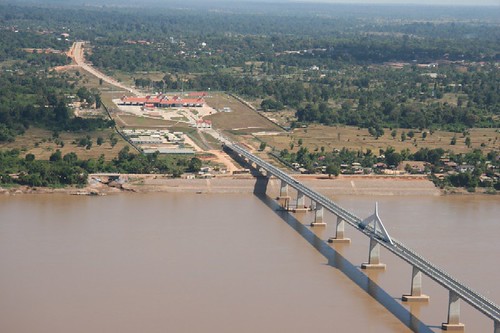
The bridge is part of efforts to open transport links in Southeast Asia under a scheme sponsored by the Asian Development Bank. The bridge connects with Road 9 in southern Laos to Vietnam.
Her Royal Highness Princess Maha Chakri Sirindhorn will preside over the opening ceremony together with Lao Vice-President Boungnang Vorachit.
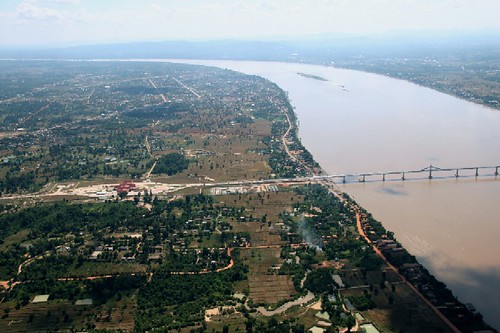
The first Thai-Lao Friendship Bridge over the Mekong links Nong Khai and Vientiane, the Lao capital. Its construction was financed by Australia and the bridge was opened in 1994.
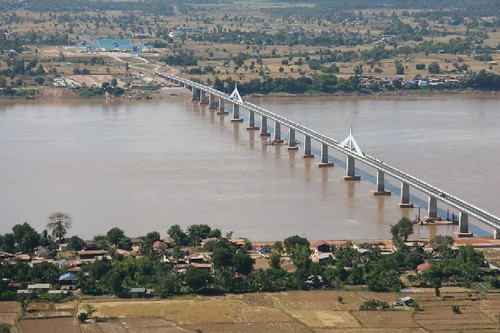
Spanning the Mekong, the new bridge, which received financing from Japan, is 12 metres wide and 1.6km long.
Attending the bridge opening ceremony today are 250 delegates from Thailand and 250 from Laos. Among the dignitaries will be Prime Minister Surayud Chulanont and his Lao counterpart Bouasone Bouphavanh.
The princess and Mr Boungnang will push electronic buttons to lift a veil covering the bridge's nameplate at 10.30am after hearing reports from Gen Surayud and Mr Bouasone. After that the princess will spend a few hours in Savannakhet before returning to Thai soil at 1.30pm.
Both Mukdahan and Savannakhet provincial authorities also plan grand celebrations for the new friendship bridge.
Mukdahan has planned a celebration over three days and three nights, beginning today, the governor said.
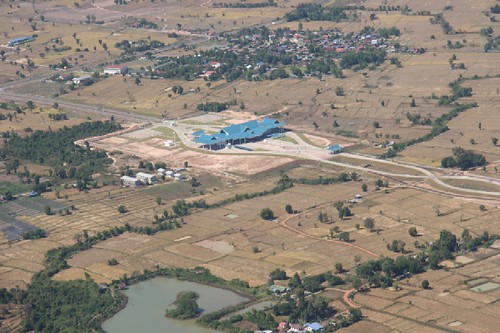
Savannakhet has been holding an eight-day celebration. The celebration began on Sunday and will end next Sunday. Part of the celebration is a trade expo and market on a large area 4km from the foot of the bridge on the Lao side.
However, after today's official opening, the bridge will not open for transnational traffic until next month, according to the Highways Department's acting director-general Songsak Phaecharoen.
Thailand and Laos have to sign a bilateral agreement regarding regulations for bridge operations and traffic rules before it can be used for cross-border activities.
Mr Songsak said Thai and Lao authorities had settled some regulatory details, including the entry fees for different types of vehicles.
However, the agreement must be approved by the government of each country before taking effect.
Trucks loaded with passengers and overloaded buses are continuing to violate regulations by stuffing in too many passengers, to maximise their profits.
Whenever someone sees this, they cannot help feeling concerned as to what would happen in an accident, as overloading can result in deaths and injures.
Vientiane authorities say drivers fill up the bus with extra passengers along the way, forcing people to stand up or hang on the back of the truck. When this happens after drivers have left the stations, it is especially difficult for the authorities to stop them... more
“We have discussed this issue several times with the Vientiane Police Office to address the issue,” said the Deputy Director of Vientiane 's Communication, Transport, Post and Construction Department, Mr Khampheng Xaysouli.
“We really want to solve the issue, but the current system is not appropriate, and we need an appropriate mechanism. The problem is that we don't have highway police checking the vehicles. But we are working in cooperation with local police in some areas of various provinces.”
Mr Khampheng said that before leaving the station, buses and trucks are checked and the vehicles will be checked again when they enter the next station. In the past, police stopped many trucks and buses that violated the rules to educate and fine the drivers, but this has not stopped the practice.
“We don't have enough people to monitor and fine them,” he said.
In fact, according to the law, trucks with passengers in the back should drive below the speed of 60km per hour, and buses should only carry one passenger per seat, with a maximum of 35 to 45 seats. The backs of trucks should be limited to around 10 passengers.
Mr Khampheng said that many vehicles did not follow this rule. They drove fast and were filled up with too many people, causing accidents.
On one April morning, a public bus skidded off a hillside road, in Phoukhoun district, Luang Prabang province, killing 17 passengers and injuring 30 others, around 300km north of Vientiane.
A few weeks ago, a public bus on its way to the capital from Champassak province slammed into a truck carrying gravel in Khammuan province, killing three people and injuring ten passengers.
Mr Khampheng said police would install equipment next month to evaluate the speed of all long-haul trucks along the roads, in particular between Vientiane and the northern and southern provinces.
Mr Khampheng said his department would also strictly check buses in Vientiane that stop between proper bus stops, disturbing the traffic. “We will discus this further with relevant sectors to find appropriate solutions to the problem,” he said.
(KPL) Four talented Lao people were selected to attend the 41st and 42nd International Association of Traffic and Safety Science (IATSS) Forum in Japan for exchanging culture with Japan.
Two out of four people from Laos will participate in the 41st IATSS Forums will be scheduled on April 2007 and two people will participate in the 42nd on September 2007... more
The lucky persons to attend the 41st IATSS are Ms Polalak Khamkhosy and Mr Masouvanh Somkhuan, and the 42nd are Mr Laninnakhone Lathsasak and Mr Kongthanou Khanthavisay. The selecting committee comes from the IATSS of Japan, Lao Youth Union, the secretary of the IATSS project, the representatives from HONDA Company and Japanese Embassy to Laos.
The IATSS Forum is a training institute established in 1985 through a personal grant from Soichiro Honda, and Takeo Fujisawa, the founders of Honda Motor Co., Ltd., with the aim of nurturing talented young leaders to shoulder Asia’s future.
The roots of "forum" as a term meaning "gathering place" in ancient Rome suggest IATSS Forum's role as a gathering place for young professionals from ASEAN and Japan. Inviting talented people from ASEAN countries to Japan for a broad range of seminars, field study, Group Study and cultural exchange under the common theme, "Thinking and Learning Together," the Forum is a place for participants to develop a greater understanding of their ASEAN neighbors and to address current issues facing ASEAN and Japan.
The program of IATSS Forum is developed by a diverse group of learned individuals from various fields, who make up the IATSS Forum Program Committee. We invite top lecturers from academia and industry. Specific issues addressed in each session vary to meet the needs of the times. But our commitment is to focus not so much on in-depth research in a particular field, but on the liberal arts skills required to become young leaders.
The first IATSS Forum Program was held in September 1985 with participants from Malaysia. As of 2005, a total of 38 IATSS Forum Programs have been held so far. Programs originally included participants from only a single country but beginning in 1991 the IATSS Forum Program became an ASEAN Forum, with young people from several nations taking part simultaneously. About 700 participants have completed programs over the last 20 years. Today we invite about twenty young people from ASEAN countries to Suzuka City twice each year, in spring and fall, for the 55-day Forum Program.
IATSS Forum facilities and accommodation are located in the city of Suzuka, Mie Prefecture, in central Japan. The city is conveniently situated about 50 km south of Nagoya, or about 40 minutes away by train. Facilities include a lecture hall, computer room, cafeteria, library, recreation room, laundry room, kitchen and prayer room. Participants enjoy private rooms and on weekends can take advantage of such nearby amenities as tennis courts, indoor swimming pool and spa.
The Participants will have many opportunities to meet people from the Suzuka area and other cities. Participants can also enjoy a variety of recreational and cultural activities including Japanese cultural introduction, home stays, and cultural-exchanges.
Participants visiting other cities have the opportunity to take part in a variety of activities specific to each region and can meet people from many walks of life, including local businesses, non-profit organizations, local government officials, teachers, and students. These activities are designed to provide each participant with a unique experience.
IATSS Forum program consists of three main elements each of which is designed to maximize the benefits of the 55-day program, by taking into account current regional and world issues. The IATSS Forum program was comprised Seminars and field study, Group Study and Study tours.
After completing the IATSS Forum programme, participants return to their home countries and apply their experiences at the Forum as leaders in a variety of fields. At the same time, they join IATSS Forum alumni associations in their home countries. These organizations offer a place to continue sharing a wealth of experience through networks of alumni that span a broad range of ages and occupational fields.
Active alumni associations in each country provide opportunities for alumni to get together and exchange the latest information from various fields. Alumni activities also include informational sessions for prospective applicants and NGO-type community services such as English lessons or traffic safety education for disadvantaged children.
International Alumni Meetings, which take place in a different country every second year, provide an opportunity for representatives from each country's alumni association not only to report on their activities but also to engage in a lively exchange of views about recent issues that concern them.
The Lao National Sports Committee welcomed home wushu silver medalist Phosay Aphailath on his return from the 15 th Asian Games in Doha yesterday at the Lao-Thai Friendship Bridge.
Wushu fighter Phosay Aphailath takes flowers to the Kaysone Phomvihane Museum . Phosay, who competes in the 56kg category, was the first athlete ever to win a silver medal at the Asian Games. Two other Lao wushu fighters, Phoukhong Khamsounthone and Langsanh Masopha, were not so fortunate. Laos sent 15 athletes to compete in seven sporting events in Doha .
On their return, committee officials and the entire wushu squad paid a visit to That Luang to pay their respects to the statue of King Saysetthathirath, before visiting the Kaysone Phomvihane Museum .
Also in attendance were Lao Front for National Construction President Mr Sisavath Keobounphan and Lao National Sports Committee President Dr Phouthong Seng-akhom.
Laos to exempt Japanese tourists from visa requirements from Jan. 1
(Kyodo) _ Laos will exempt Japanese from visa requirements for short-term stays from Jan. 1 in a bid to strengthen the two countries' ties, visiting Laotian Foreign Minister Thongloun Sisoulit said Friday.
Doubling as Laos's deputy prime minister, Thongloun also called for more direct investment from Japan during his speech in Tokyo.
He said he conveyed the visa exemption plan to Japan when he met his Japanese counterpart, Foreign Minister Taro Aso on Thursday.
"Even though Japan does not exempt visa requirement for Laotians, we exempt it for Japanese unilaterally," he said... more info:.
Thongloun said he hopes the visa exemption will help promote tourism and encourage cultural and academic exchanges between the two countries, and lead to an increase in direct investment from Japan in the future.
He said boosting foreign direct investment is very important for Laos to achieve its plan to break away from the group of the world's poorest nations by 2020.
"Japan now ranks the fifth in terms of foreign direct investment in Laos, and I want Japan to be the largest or second largest as soon as possible," he said.
In terms of foreign direct investment in Laos, Japan lags behind Thailand, Vietnam, China, and France.
"I believe the future of Japan's investment in Laos is bright," Thongloun said, citing the country's stable political conditions, public safety, and bountiful resources such as mineral substances like iron, gold and copper.
He said Laos plans to achieve at least an annual 7.5 percent of economic expansion in coming years compared with about 6.5 percent in 2005.
Like everything else in the Lao river town of Luang Prabang, the turbid Mekong appears at ease as it meanders by.
Buddhist monks in orange robes and thongs walk through the streets collecting alms. Girls on scooters, just out of school, cruise past flowering frangipanis and riverbank cafes. A chicken pecks at the roadside dirt by racks of drying rice cakes.
But modernity has crept up on what was once the ancient capital of Lan Xang, Kingdom of a Million Elephants, nestled in a jungle valley at the confluence of the Mekong and the Nam Khan rivers, about 150km south of the Chinese border...more
Tourism has rescued the town, thanks in large part to UNESCO's decision to name it a World Heritage Site in 1995 as the "Best Preserved City in Southeast Asia.".
"Here, there was nothing. Houses were empty, there were no restaurants," said Khamvanh, 35, a travel agent in Luang Prabang since 1998, looking out from his open store front at the main street, Phonthisalat.
Today, a stretch of restaurants lines the road, offering Lao specialities such as ground meat with lemongrass, and mint and
sticky rice, and dishes that cater to the growing flow of Western backpackers: pancakes, pizzas and fruit smoothies.
"Six years ago tourists came to Laos, but there was no internet or email and telephone fees were about $US6 ($NZ8.65) for aminute," Khamvanh said. "It was a pass-through point."
In recent years, however, Luang Prabang has started to draw an estimated 60,000-70,000 tourists annually, about four times the town's native population.
They come to wander around 1,000-year-old temples, sip coffee on French-colonial verandas and get lost in Luang Prabang's narrow, brick lanes lit by ankle-high ceramic lanterns.
Their presence, of course, mostly means business.
Along with the restaurants on Phonthisalat, there are convenience stores, scores of new guest houses, shops selling ethnic bric-a-brac, adventure tour guides, mobile phone dealers and a rash of internet cafes.
Bars, karaoke halls and massage parlours have popped up too.
Koung, 25, from the capital Vientiane, comes up to Luang Prabang to help her brother who runs the hip Khob Chai bar.
"It's filled every night here," she said. "Lots of people, lots of money."Luang Prabang has come a long way in a short time.
The city's pulse faded after the 1975 Communist takeover, as many Lao were hauled off to re-education camps. Homes were abandoned, monks left temples, stores closed.
In the 1990s, the outside world started to re-discover Luang Prabang, drawn by its architectural jewels, products of the mix of traditional Lao and French styles.
The town is home to dozens of slanted-roof, gold-trimmed pagodas and mansions that remain little changed from when they were built in the French colonial era, which ended in 1954. Most are now under strict preservation regulations.
"The rich architectural heritage of Luang Prabang is today proving something of a double-edged sword for the tiny city, transformed since it was added to the list of World Heritage Sites," said Nicolas Pillet, general manager of La Residence Phou Vao, one of Luang Prabang's fanciest hotels.
Signs of change are as easy to spot as coconut palms.Scores of Chinese-made scooters buzz through the streets. Several rooftops are now adorned with satellite dishes.
"Mobile phones are everywhere," said trekking guide Chanthee Phonpseuth, 22, who works at an internet cafe when he isn't leading visitors through the jungle."In the fields, farmers will be harvesting, and then - ring, ring - Hello?"
The internet is slowly catching on, too. There are now about a dozen web cafes in Luang Prabang whereas two years ago, Phonpseuth says, there were two. Most cater to outsiders, but some locals go in, including monks.
Rik Ponne, a consultant with UNESCO in Bangkok, said the growing contact with the outside world has had mixed results.
"Things change because people don't have time any more for traditions but they are into making money," he said.
"But on the other hand, it has given them pride in their culture."
Trekker Phonpseuth is an example of what the sleepy city's contact with the outside world means.His mother, father, two sisters and brother-in-law grow corn, rice and beans for a living in a village near the Kuang Si falls about 30km out of town."My father and mother told me my sisters couldn't go to school because there was not enough money. So, my father said, don't become a farmer. Life is too difficult," he said."I like my job now. The money is not too much," he said."But it's more than farming."
(KPL) The Faculty of Engineering of the National University of Laos (NUOL) yesterday launched its first Environmental Engineering and Management Master's Programme.
“This two- year intensive program is funded by the EuropeAid Asia-Link Programme, which was set up by the European Commission to promote regional and multilateral networks between higher education institutions in the European Union states and partner states in Asia,” said yesterday the Dean of the faculty Mr Boualin Soysouvanh... more info>>
The Faculty of Engineering in cooperation with the German University of Siegen has created this degree with their partners the Technical University of Krakow in Poland and Sirindhorn International Institute of Technology at Tamasat University in Thailand in order to meet the growing demands for high quality degrees in higher education of Laos. Mr Boualin was quoted as saying.
“One of the objectives of the Asia-Link partnership is to improve the engineering education offered at the National University of Laos and their research capacity in Environmental Engineering and Management,” he said.
The Faculty of Engineering has some 240 teaching staff and 5,000 students its departments. The qualification of the teaching staff on average is relatively low: 5% have a Doctorate degree, of which mainly originate from Vietnam, USA and Germany. Meanwhile, 25% have a master's degree, 40% bachelor's degree.
“This is the main reason the Faculty of Engineering cannot offer master degree programmes to the students,” continued Mr Boualin. “Moreover, only a bachelor can be offered at the Faculty of Engineering.”
The Asia-Link Project expects to increase the capacity of the Faculty especially in the topics of water resource management, renewable energies, and biomass technology, which will be taught in the Master's Programme to meet the environmental challenges Laos PDR faces.
In addition, the Asia-Link Project is seeking International Accreditation, therefore one of the requirements for the Master's Programme was an International English Language Standard Test score of 5.0.
The National University said that more than 60 applicants, 22 students have been admitted into this programme and up to three students will immediately start their Doctorate degrees under the Asia-Link Programme.
(KPL) The 2006 Transparency International Corruption Perception Index ranks Laos 111 out of 163 countries, according to the opening remarks by Setsuko Yamazaki UNDP Resident Representative to Laos.
On the occasion of International Anti-Corruption Day last Friday held in Vientiane, where was attended by 500 people and Lao leaders, including Deputy Prime Minister Asang Laoly...more info
Mrs Setsuko said, “corruption was an age-old problem-all nations around the world, to varying degrees, experience it in some form and suffer accordingly. The World Bank recently estimated the cost of worldwide corruption at a staggering US$1.5trillion-or 5 percent of global GDP each year”.
The consequence of corruption is affected badly to the nation construction, to combat corruption, the UN General Assembly adopted the United Nations Convention Against Corruption (UNCAC) in 2003. Lao PDR was among the first countries to sign the convention. UNCAC came into force on 14 December, 200, after it was ratified by 30 countries. Earlier in the same year, Lao PDR had also adopted national anti-corruption legislation.
Early this year, The President Choummaly Sayasone said that the problem of corruption has grown over the years and needs urgently to be addressed. This point was reiterated at the recently concluded Ninth Round Table Meeting on 29 November and the Government of Laos took a strong stance by sign the “Vientiane Declaration on Aid Effectiveness” with 22 development partners, which called on Lao Government to “take leadership in the financial management improvement process.” All these concrete action clearly represent a political willingness to tackle corruption problems.
Deputy Prime Minister Asang also called on civil servants, officers, mass media, businesspersons and all citizens gather together to monitor the corruption to help government in the prevention and anti-corruption, aiming at preserving state property, society and Lao citizens.
The celebration, as the Lao Government in collaboration with UNDP celebrated the 3rd anniversary of International Day Against Corruption.
(KPL) The Lao Brewery Company (LBC) last week launched a new calendar 2007 publishing for society service.
More than 100 people from private, state organizations and media took part at launching ceremony.
Deputy Managing Director of LBC, Mr Sounthone Phommachack said, “the company was pioneer publishing the calendar for six years”... more info
The LBC is the first company published “the beautiful girl’s calendar in Laos”, before the LBC initiated the pictures of beautiful girls involved to the preservation of the Lao traditional silks and textile in 2000.
During 1990 to 1999, the LBC’s calendars had only beautiful natural scene. Mr Sounthone added that the the LBC’s calendars issue each year, it is very importance for sellers and general public because they will use it effectively as following date, month, and national importance day, including many importance day of world. Therefore the meanings of calendar does not only promote the company and products, but also preserved Lao traditional culture through these calendars. For instance many customers both foreign and Laos are trusted in LBC’s products, particularly foreigners would know about Lao traditional culture.
There are six models have been printed in this year’s calendar, were selected from 269 girls passing through three rounds competition.
The LBC was established in Laos in 1971 and began production in 1973.At present the company produces about 120 million liters of beer every year. Its products penetrate 99 percent of the domestic market, with 60 percent of total distribution going to Vientiane and 40 percent to the rest of the country. Next year its output will rise to 160 million liters. The company also exports beer to America, Australia, Cambodia, the UK, France, Japan, New Zealand, Thailand and Vietnam.
The construction of second factory of LBC, located in Champassak province is underway with a total cost of US$ 25 million of investment. The second expects to initiate producing beer in October next year, with a production capacity of 200 million litres per year. However, initially the factory will produce only 50 million litres annually. Once the new factory opens, overall annual production will be 210 million litres.
(KPL) More than 60 officials from private and state organizations yesterday discussed an issue of trademark of Lao organic agricultural products to create opportunity accessible international market.
The meeting on fair commerce for Lao organic agriculture products took place in Vientiane from 7-8 December with the aim of create Lao organic agriculture products for export... more
The discussion is to help “Lao organic agriculture products and economy’s Laos is accessible linking to regional and international economy”. It is challenge for Laos is a small domestic market and agricultural production is still relied on traditional production and low technology and productivity, is attributed to agricultural producers are still poor people.
Therefore, organic agricultural production and fair trade could be one of the possible solutions for families business can compete with other countries that have strength on modernised and technology of industrial production.
Lao government sees this advantage opportunity of Lao organic agriculture products by learning valuable lessons from developed countries.
Meanwhile, the Ministry of Agriculture and Forestry recently issued a decree on the promotion of organic agricultural production for export, the export plan has been drafted by the Department of Production and Trade Promotion in cooperation with International Trade Centre.
Another bridge linking Thailand's Mukdahan Province and Savanakhet of Laos will open December 20.
HRH Princess Maha Chakri Sirindhorn will preside the opening. There will be three days of celebration from Dec 20-22 in Thailand to mark the event, while Laos will organise a border fair from Dec 17-24 featuring 200 booths selling local products . The bridge spanning the Khong River is 12-metre wide and 1.6 kilometres long. It is the second bridge across the Khong, following the first one linking Nong Khai and Vientiane, the Laotian capital.
Mukdahan governor Boonsom Pirinyawong expects the new bridge to greatly increase trade and travel between Laos and Thailand and other Indochinese countries. The fee for crossing the bridge for a car or pick-up truck is 50 baht.
To view more photos: http://www.activeboard.com/forum.spark?forumID=98894&p=3&topicID=9395735
The Viet Nam Coffee Corporation (Vinacafe) and the Dak Uy Coffee Company of Kon Tum province have reached an agreement with Champassak province of Laos to grow 1,000ha of coffee in Champassak.
Hoang Trung Quy, Director of the Dak Uy Coffee Company, said Champassak's administration allowed Vinacafe to rent 1,000ha for growing coffee and will consider to allocate another 3,000ha-5,000ha to Vinacafe... more
The Champassak administration said that the Vinacafe programme to grow coffee in Laos, particularly in Champassak, was within the 2006-2010 economic cooperation programme between the Lao and Vietnamese governments.
Quy further informed that Vinacafe, the Dak Uy Coffee Company and the Champassak province also worked on a programme to build coffee processing establishments and outlets for coffee products.
Photo: Healthcare workers show villagers how to impregnate bed nets with a chemical mosquito repellent
Laos: Winning the war on malaria By Marga Ortigas in Savannakhet, Laos
Malaria was once the leading cause of death in Laos but now it is slowly being eliminated due to improvements in infrastructure and the introduction of combination drug therapy.
Al Jazeera drove south from the capital, Vientianne, where five years ago there would have been malaria cases in every village along the road.
Laos has used international funds to improve the road network across the country giving people better access to healthcare facilities. It is also sending health workers to far-flung villages to conduct awareness programmes... more
We visited the village of Savannakhet where residents are learning how to "impregnate" their bed nets with a chemical mosquito repellent and the message seemed to be getting through.
When asked how many of the villagers had suffered from malaria only one man raised his hand.
Improved strategy
The health workers are also teaching them to self-diagnose, and self-medicate, only the serious cases are passed on to health centres.
Further south we visited a district hospital which today gets only three malaria patients a day, in contrast to 20 that it received daily 5 years ago.
Vong Deuan, a school teacher, had been keeping vigil by her four-year old son Chun for twenty-four hours. She had taken precautions to protect her son against malaria but he still got bitten by a mosquito.
"Of course I'm scared. I know people die from malaria but I also know there is a cure," she said.
Fifty-year old Phou Vilaysone had malaria for the fourth time but is certain he will be cured again because the government is providing new combination-drug therapy known as ACT. It is a more expensive treatment but also more effective.
There are still not enough health centres in Laos but doctors say they are winning the fight against malaria and with continued international aid, they hope to eradicate malaria in the next twenty years.
(KPL) An old railway was constructed in1917 by France in Champassak province the most southern part of country will be rebuilt next year, said a governmental senior official.
After the Lao government signed a Memorandum of Understanding (MOU) with a foreign company of the Republic of Korea last month.
Deputy Director of the Lao National Railway Authority Sonesack N Nhansana told KPL news reporter Tuesday that “the foreign investor would invest around US$6 million in the Improvement and Reconstruction of Old Railway Project in Champassak province”... more
The railway stretches 6.5 km from Ban Khonetai to Ban Deth (Khonephapheng biggest waterfall), Khong district in the most southern of Champassak province. The construction is under mutual cooperation between the Lao government and Korean investor and it would be launched in 2007.
The project is aiming at promoting tourism the most southern province and strengthening the national economic growth in the future.
The engine of train has been preserved by local authorities and people of Ban Khonetai, it is also an attractive tourism site for foreigners during Ban Khonetai to Khnonepapheng waterfall.
In the past, this railroad was used for goods transport from Laos to Cambodia.
Laos expects to see about 1.3 million visitor arrivals this year, 10% more than last year.
This estimate reflects the overall expansion of the tourist industry in Laos over the past 31 years since the country was established as the Lao People's Democratic Republic in 1975.
The rapid growth of the sector is the result of the government's new economic strategy, launched at the same time as the country opened its doors to the world in 1986... more info
Parallel to economic development, the country has become an international tourist destination.
The government and people of Laos have made great efforts to develop the economy while at the same time preserving national heritage sites as tourist attractions.
Laos does not have typical tourist attractions such as beaches or theme parks, but draws visitors instead with its rich culture, traditional lifestyle, and unspoiled natural beauty.
The charm of Luang Prabang's 600-year-old architecture won it inclusion in the United Nations' Educational Scientific and Cultural Organisation (UNESCO) World Heritage List in 1995.
The ancient city was the royal capital of Laos during the Lane Xang kingdom from the 13th to 16th centuries. The town became the first World Heritage site declared in Laos, ensuring the preservation of its mixture of traditional Lao and French colonial architecture, along with some 63 Buddhist temples that evaded bombing during the Indochina war.
The city's magnificent temples are considered to be among the most beautiful still standing in Southeast Asia, and the city is renowned as the cultural and religious capital of Laos because of them and because of the cultural traditions maintained by local residents.
Despite its remote location in the midst of rolling mountains, the unique character and charm of Luang Prabang has helped to make it one of the most popular tourist destinations in the region, for both Lao and foreign travellers.
The ancient ruins of Vat Phou in Champassak province are part of the long history of contact between the Lao, Khmer and Champa peoples.
Vat Phou is a complex of religious edifices and temples, ascending from a low baray (man-made lake) to a natural spring at the peak of a sacred mountain, with an impressive view over the Mekong.
The temples show several styles from different periods: Hindu, Buddhist and animist. The site is recognised as one of the most important sanctuaries of Cambodia's Khmer Empire, which thrived from the 9th to 13th centuries.
Vat Phou is the largest example of Khmer architecture in Laos, featuring the most ancient Sanskrit inscription anywhere in Southeast Asia. Vat Phou became Laos' second World Heritage Site to be recognised by UNESCO.
At the other end of Laos, the northeastern province of Xieng Khuang is one of the country's poorest provinces, but is also rich in culture and natural beauty, featuring pre-historic sites such as the Plain of Jars.
The Plain of Jars is another of Laos' tourist attractions. The mysterious relics of a bygone era were hewn from solid rock between 2,500 and 3,000 years ago.
The National Tourism Authority of Laos and UNESCO began their Plain of Jars Heritage Tourism Programme in 2003, fostering widespread interest. The Plain of Jars is expected to become Laos' third World Heritage Site in the near future.
The Lao National Tourism Administration is pleased with the growing figures since 1999, when the country first began its "Visit Lao Year" promotion, marking a significant turning point in the growth of tourism.
In addition to direct promotion, important international events hosted by Laos in recent years have attracted more visitors and raised the country's profile, such as the 10th ASEAN Summit, the ASEAN Tourism Forum, and the Indian-ASEAN Car Rally.
The number of tourist arrivals in Laos has increased from around 37,000 visitors in 1991, to around 895,000 in 2004, earning the country USD118.9m. Last year, almost 1.1 million visitors came to Laos.
This is a trend that the government wants to see continue. In particular, it wants to expand Laos' ecotourism offerings. In an age when environmentally responsible tourism experiences are increasingly in demand, Laos offers extraordinary new opportunities for the discerning traveller.
With a reputation for warm hospitality and a number of internationally supported ecotourism projects already underway, Laos is well positioned as a world-class ecotourism destination.
With extraordinary growth in tourism across Southeast Asia, ecotourism in Laos offers huge potential to create employment and help achieve the national development objectives for poverty elimination, economic growth and conservation of the nation's natural and cultural resources.
The Nam Ha National Biodiversity Conservation Area in Luang Namtha in the northwest of Laos is an example of what the National Tourism Administration seeks to encourage.
Launched by the administration in 1999, with assistance from UNESCO and the New Zealand government, the highly successful Nam Ha initiative introduced the concept of ecotourism to Laos and in so doing received significant international acclaim and a UNDP award in recognition of its contribution to poverty reduction.
To promote the government's ecotourism strategy, a website (http://www.ecotourism-laos.com/) has been set up, providing information both for tourists, and on policy directions for the sector.
20 National Biodiversity Conservation Areas have been established, covering 14%t of Laos. These areas, and the land around them, are home to ethnic groups with rich cultural traditions, who will ultimately benefit from tourist dollars generated by conservation projects.
The administration's plans are just one part of the development picture, with the government also developing a wider policy to increase tourism generally by improving transportation and infrastructure around the country.
The result should be that by 2010, around 1.5 million tourists will be enjoying the hidden delights of Laos and contributing to the local economy. (By M Vongsam-ang, Vientiane Times/ANN)
KUALA LUMPUR: The AFC Appeals Committee has reduced the one-year suspension placed on the Laos Football Federation to six months while maintaining the USD 15,000 fine for fielding an overaged player in the AFC U-13 Festival of Football 2005... more info
The Laos FF were suspended by the AFC Disciplinary Committee from all AFC youth competitions on August 31, 2005, and the federation appealed against the decision while accepting the bans on the said player and the two Laotian officials implicated in the case.
The committee accepted the Laos FF¢s contention that a suspension for one year would be detrimental to the development of football in the country as well as the fact that this was the first time the Laos FF had contravened AFC rules and regulations.
The suspension will now run from August 31, 2006, to February 28, 2007.
Deadline: 18 December 2006 Application for the Singapore Scholarship Academic Year 2007/2008 is now open
Application for the Singapore Scholarship must be submitted on the prescribed application form (The application form and supporting documents must be of A4 size and printed on one side only). Please contact the Singapore Embassy/ High Commission/Consulate-General in your capital city for a copy of the Singapore Scholarship brochure and application form. You may click here for a softcopy of the application form for AY 06/07... more info:.
Applicants will be required to submit a typed-written essay of about 300-500 words. The essay is an important part of your application.
All supporting documents have to be attached. Those supporting documents that are not in English must have a certified translation in English. Translation and certification of transcripts and academic records have to be done by your educational institutions.
Applications must be endorsed and submitted by their respective ASEAN Governments. The relevant agencies to endorse the application are:
Brunei Darussalam Ministry of Education
Cambodia Ministry of Education, Youth and Sport Cultural Relations and Scholarships Department. Contact Person: Mrs Kan Neary
Indonesia Bureau of Foreign Co-operation Department of National Education Gedung C, Lantal 7 Jl Jend. Sudirman Senayan Jakarta Tel No: 001-6221-5738181 Fax No: 001-6221-5709445 Contact person: Ibu Yun Widiati, SH
Lao People's Democratic Republic Mr Lytou Boupao, Director General (Department of Planning and International Cooperation) Ministry of Education Vientiane Lao PDR Tel No: 214722 Fax No: 216006
Malaysia Public Service Department, Training Division Contact Person: Cik Intan Liana
Myanmar Ministry of National Planning and Economic Development Foreign Economic Relations Department Minister's Office Theinbyu Road Botataung Township Yangon Tel No: 249431 Fax No: 256424 Philippines NEDA and DFA
Thailand Ministry of Education, External Relations Division Contact Person: Mr Rathawut Piamsarit Vietnam Director General International Relations Department (Ministry of Education and Training) 49 Da Co Viet Street
Hanoi, Vietnam
* Late and incomplete applications will not be considered. Documents submitted separately from applications will also not be considered. * Please also note that most shortlisted nominees will take the entrance examinations set by NTU or NUS. All shortlisted nominees will also have to undergo an interview conducted by interviewers from NTU , NUS and SMU. The entrance examinations and interviews will be conducted in the respective ASEAN countries.
* The decision of the Singapore Government on the selection of Singapore Scholarship recipients is final.
What is Offered
The Singapore Scholarship is tenable for the minimum period required to obtain the respective degrees at Nanyang Technological University, National University of Singapore or Singapore Management University. It covers full tuition fees and a living allowance of S$4,300 (covering meals, transport, textbooks and course materials during schoool semester) per academic year. In addition, a separate full accommodation allowance based on the room rates at each university or designated hostel (for SMU which does not have on-campus accommodation) will be provided during school semester.
One return economy class air ticket is provided for the Scholar’s passage from his/her home country to Singapore for the duration of studies determined by the Singapore Government. No additional assistance will be provided for other travel expenses.
A recipient of the Scholarship may not concurrently hold any other Scholarship, Fellowship, Grant or Award without the prior approval of the Singapore Government. There is no bond imposed on the Scholarship by the Singapore Government. The Scholars are expected to return home to contribute to the development of their countries upon graduation.
The Singapore Government reserves the right to terminate the Scholarship if the Scholar’s academic progress is unsatisfactory or his conduct is in violation of the university's rules and regulations.
Application Form : click here Latest Submission : 18 Desember 2006
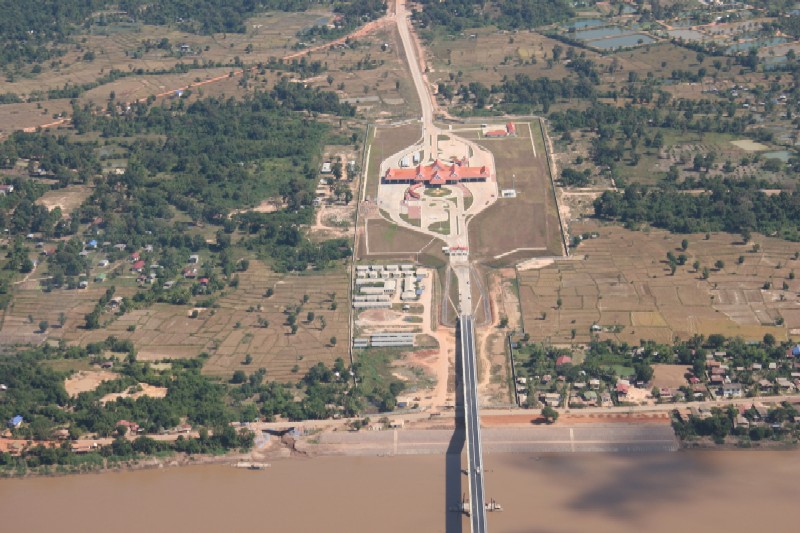
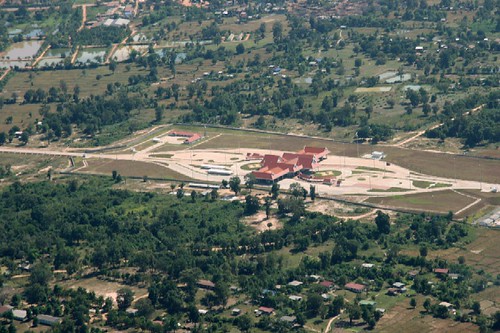
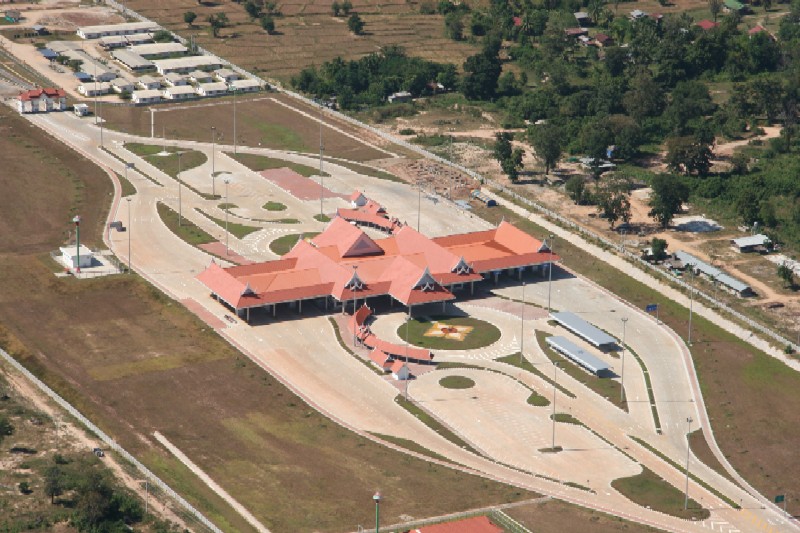
The 2nd Lao-Thai bridge across the Mekong river between Savannakhet province of Laos and Moukdahan of Thailand will be officially open very soon. Samakomlao proudly present you some snap shots of this bridge before their grand opening.

 Lao Telecom Calenda 2007


 (KPL) Early this year, there are lost of big events occurred nationwide related politic and socio-economic development.

 Savannakhet _ Female sex workers here are hoping business improves after the second Thai-Lao friendship bridge linking Thailand's Mukdahan and this southern Lao border province opens for actual use next month. They believe the bridge will attract people from all over the world to their town, including the 84 nightspots where they work.


 (KPL) The Faculty of Engineering of the National University of Laos (NUOL) yesterday launched its first Environmental Engineering and Management Master's Programme.
 LBC launches 2007 calendar
  (KPL) More than 60 officials from private and state organizations yesterday discussed an issue of trademark of Lao organic agricultural products to create opportunity accessible international market.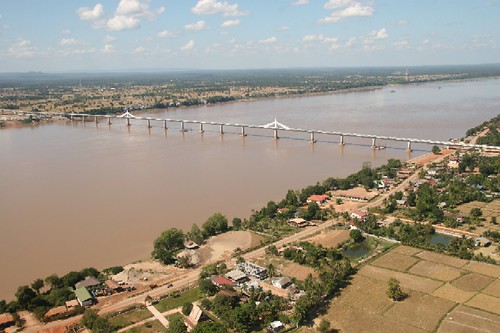
 Photo: coffee in Paksong, southern Laos
 Photo: Healthcare workers show villagers how to impregnate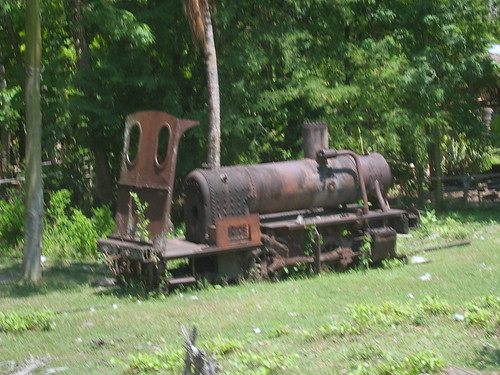


 The 2nd Lao-Thai bridge across the Mekong river between Savannakhet province of Laos and Moukdahan of Thailand will be officially open very soon. Samakomlao proudly present you some snap shots of this bridge before their grand opening.